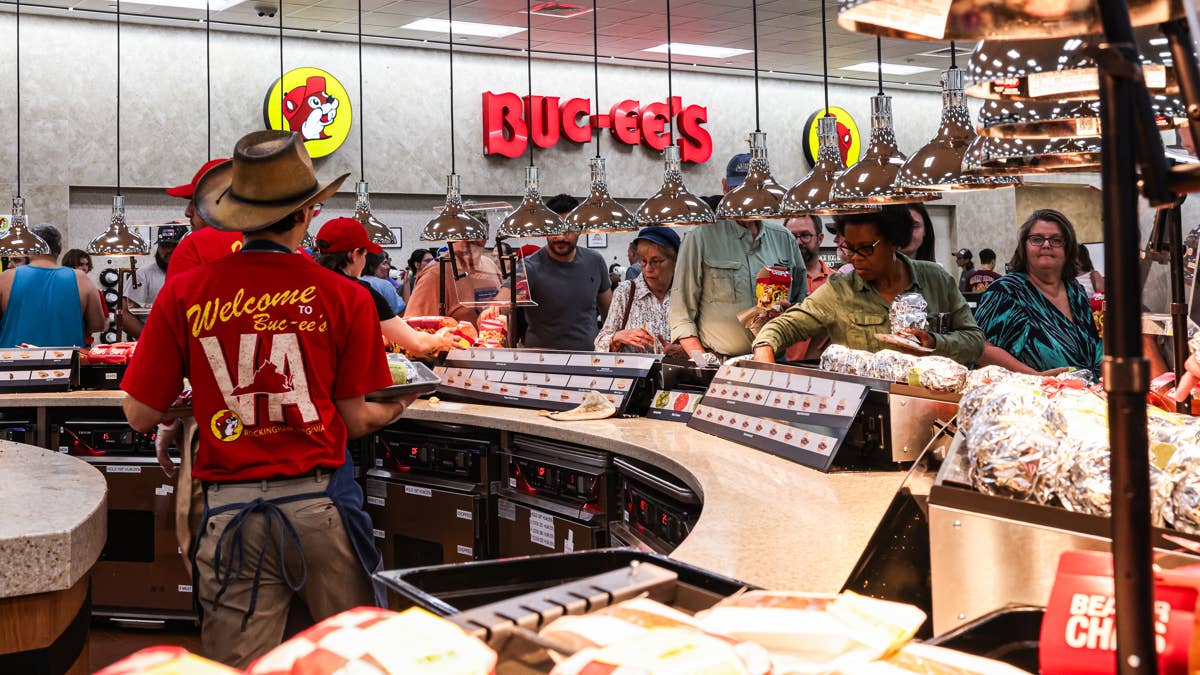
Founded in 1982 in Clute, Texas, this roadside chain has evolved from a regional fuel stop into one of the country’s most recognizable travel destinations.
What began as a convenience store with gas pumps now attracts road-tripping families, commuters, and long-haul drivers who often incorporate a stop into longer trips.
Its popularity goes far beyond fuel. The company built a highly loyal customer base by turning a routine stop into an experience while reflecting the long-standing idea that “everything is bigger in Texas.” Many locations feature expansive retail spaces packed with convenience items, made-to-order food, branded merchandise, home décor, and barbecue counters.
That company is Buc-ee’s.
The chain has also become nationally known for maintaining exceptionally clean restrooms, an operational standard that is central to its identity and a meaningful contributor to customer loyalty.
Now, after decades of steady growth and an expanding national footprint, Buc-ee’s is preparing to enter several new markets, including Arizona this year and Louisiana, Kansas, and Wisconsin by the end of 2027, while continuing to expand across states where it already operates.
The chain began expanding beyond Texas in 2019 with its first out-of-state location in Alabama and has since accelerated growth across multiple regions. Today, Buc-ee’s operates 55 locations across 12 states, according to the company’s store locator.
List of Buc-ee’s new store openings
Buc-ee’s multi-year expansion plan currently includes the following locations, according to the company’s website:
2026
- Goodyear, Arizona: June 22
- San Marcos, Texas: August
- Benton, Arkansas
- Murfreesboro, Tennessee
2027
- Oak Creek, Wisconsin
- Ruston, Louisiana
- Kansas City, Kansas
- Gallaway, Tennessee
- St. Lucie County, Florida
- Boerne, Texas
- Monroe County, Georgia
2028
- Mebane, North Carolina
- Lafayette, Louisiana
2029
- Ocala, Florida
- West Memphis, Arkansas
- Oak Grove, Kentucky
2031
- Hardeeville, South Carolina
“Tons of yellow heavy construction equipment cover acres of recently cleared land that will be the site of the Buc-ee’s opening in Mebane, North Carolina, in 2028,” reported TheStreet business and economic journalist Mary Helen Gillespie.
“The state has also begun widening the nearby highway Interstate 40/Interstate 85 by extra lanes to accommodate the expected — and hoped for — massive increase in traffic and the economic boost it will bring to the rural area.”
Buc-ee’s expansion strategy
The expansion comes as Buc-ee’s confirmed plans to close its Port Lavaca, Texas, location, an uncommon move for a company better known for opening new sites than shutting them down.
Unlike the brand’s modern large-format travel centers, the Port Lavaca location is one of its smaller and older stores, making it less aligned with the company’s current operating model.
Here’s some of my previous coverage on Buc-ee’s:
- Iconic convenience store chain shares growth plans (here’s where)
- 44-year-old gas station chain makes rare closure after 26 years
- Starbucks rival launches coffee shops in cult favorite chain
The closure appears more consistent with the company’s shift toward larger-format travel centers designed to handle higher traffic volumes and support a wider mix of revenue streams.
That operating model has become more important as fuel retailers face growing pressure to reduce dependence on gasoline sales alone.
Buc-ee’s locations are designed as destination stops rather than traditional gas stations. In addition to extensive fueling capacity and electric vehicle charging infrastructure, stores typically include large retail footprints offering fresh food, snacks, apparel, home goods, and branded merchandise.
The company’s approach reflects a broader industry trend toward creating more reasons for customers to spend time and money beyond the pump. The expansion strategy also aligns with a business model that generates revenue from multiple categories rather than primarily from fuel sales.
Why Buc-ee’s may be better positioned against fuel price volatility
Oil prices have risen more than 40% since the start of the year amid continued market volatility, increasing fuel costs for consumers and gas station operators alike, according to NBC News. Even so, gasoline profit margins remain relatively thin.
According to industry data from Gas Station Equipment, fuel sales typically generate margins of just 1% to 3% per gallon after accounting for wholesale costs, taxes, and transportation expenses.
In comparison, convenience and in-store purchases often contribute a disproportionately large share of profitability.
Data from the National Association of Convenience Stores (NACS) show:
- Approximately 80% of U.S. gas stations operate a convenience store.
- About 44% of fuel customers enter the store during a visit.
- Roughly one in three makes a purchase.
- In-store sales generate around 30% of revenue but approximately 70% of profit.
Those economics help explain why convenience retailers continue investing heavily in foodservice programs, amenities, loyalty initiatives, and expansion strategies that diversify revenue and improve scale.
The combination of thin fuel margins and higher-margin in-store spending helps explain why travel-center operators increasingly compete on food, convenience, and destination appeal rather than gasoline pricing alone.
Industry observers also noted that larger networks can spread fixed operating costs across more locations while creating additional opportunities to grow higher-margin categories.
As analysts at Hacsys have noted, gas stations increasingly face challenges generating meaningful profit from fuel sales alone, making diversified revenue streams more important for long-term growth.
Buc-ee’s expansion comes as gas stations forced to rethink strategies
For Buc-ee’s, the expansion reinforces a strategy centered on large, high-traffic travel centers designed to maximize both fuel demand and in-store spending.
As fuel market volatility and operating costs continue to reshape the sector, even established operators are reevaluating how they grow, suggesting that scale, operational efficiency, and revenue diversification may play an increasingly important role in the future of roadside retail.
Related: Convenience store giant sells stores, exits market